
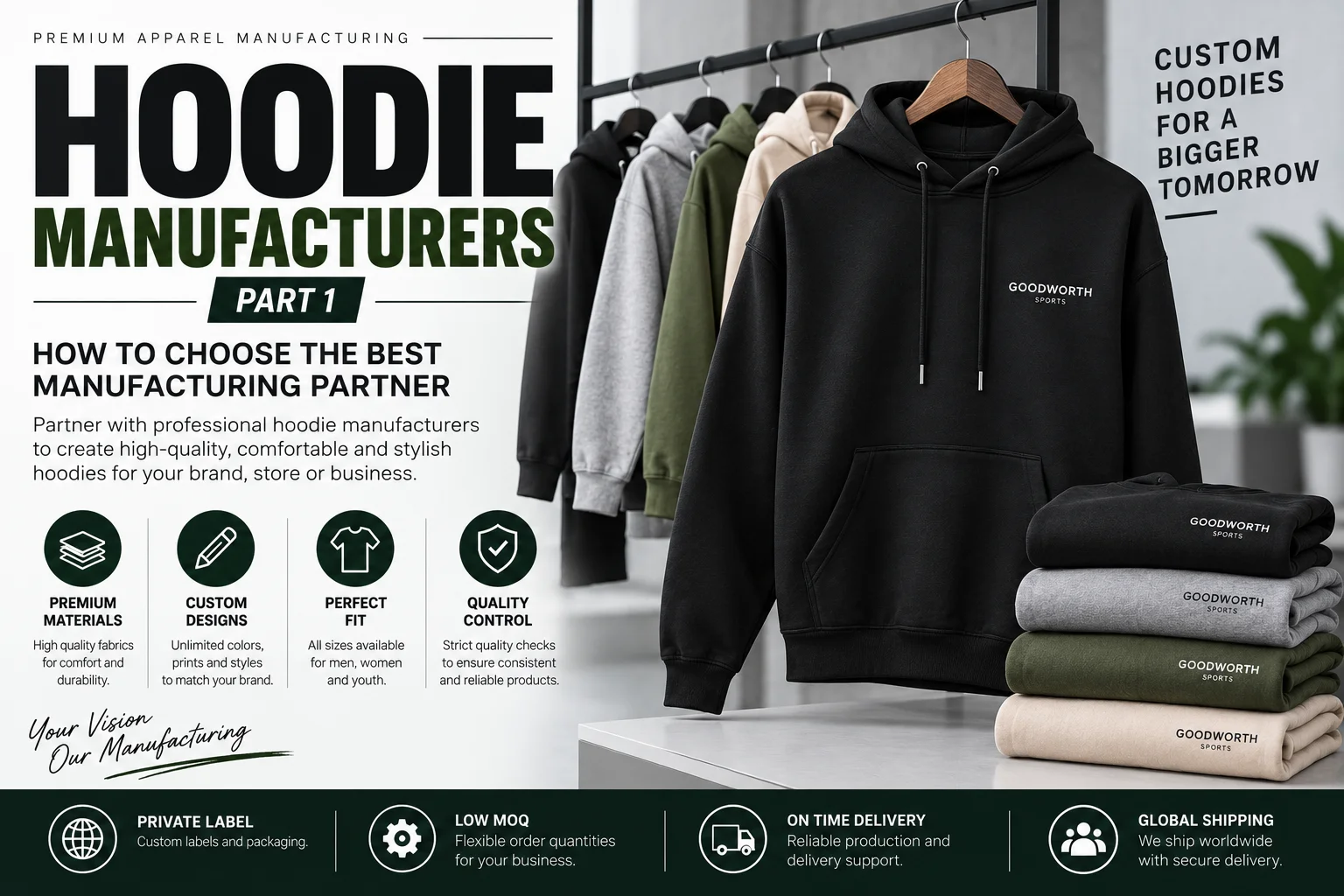
Choosing the right Hoodie Manufacturers is important for clothing brands, sportswear businesses, retailers, and private-label companies. A reliable manufacturer can help produce hoodies with high-quality fabrics, comfortable fits, durable stitching, and attractive designs.
Hoodies are popular across casual fashion, streetwear, sportswear, and lifestyle clothing. Working with an experienced manufacturing partner allows brands to create products that match their target market and brand identity.
What Are Hoodies?
A hoodie is a casual garment featuring a hood, usually designed to provide warmth, comfort, and everyday style. Hoodies can be produced in different weights, fits, fabrics, and designs.
Professional Hoodie Manufacturers can create products ranging from lightweight everyday hoodies to heavyweight premium streetwear styles.
Why Choose Professional Hoodie Manufacturers?
Experienced Hoodie Manufacturers understand the importance of fabric quality, sizing, stitching, finishing, and overall garment construction.
A professional manufacturer can also provide custom production services for businesses that need specific colors, measurements, prints, embroidery, labels, or packaging.
Types of Hoodies
Pullover Hoodies
Pullover hoodies have a simple design without a front zipper. They are widely used for casual wear, streetwear, and sportswear collections.
Zip-Up Hoodies
Zip-up hoodies feature a front zipper and are easy to put on and remove. They are suitable for casual and athletic clothing.
Oversized Hoodies
Oversized hoodies offer a relaxed fit and are particularly popular in modern streetwear and fashion collections.
Sports Hoodies
Sports hoodies are designed for athletes, teams, and activewear brands. Lightweight and breathable materials can be used for improved comfort.
Heavyweight Hoodies
Heavyweight hoodies use thicker fabrics and are often selected for premium streetwear, winter collections, and durable everyday clothing.
Fabrics Used by Hoodie Manufacturers
Cotton
Cotton provides a soft and comfortable feel and is commonly used for premium casual hoodies.
Polyester
Polyester offers durability and can be suitable for sportswear and performance-focused hoodie designs.
Cotton-Polyester Blend
Blended fabrics combine properties of cotton and polyester, offering a balance between comfort, durability, and easy maintenance.
Fleece
Fleece is commonly used for warm hoodies because of its soft interior and insulating properties.
French Terry
French terry provides a lighter alternative to traditional fleece and works well for transitional-season and everyday hoodies.
Custom Hoodie Manufacturing
Professional Hoodie Manufacturers can offer a wide range of customization options. Brands can select custom colors, fabric weights, fits, prints, embroidery, labels, and other garment details.
Customization allows businesses to create hoodies that match their brand identity instead of relying on standard designs.
Private Label Hoodie Manufacturing
Private-label hoodie production allows businesses to sell hoodies under their own brand name. Manufacturers can produce garments according to the brand’s requirements and add custom neck labels, care labels, hangtags, packaging, and other branding elements.
Before placing a large order, requesting samples is useful for checking fabric quality, sizing, stitching, printing, and finishing.
Quality Control
Quality control is an important part of hoodie manufacturing. Reliable Hoodie Manufacturers should inspect fabric, measurements, stitching, seams, prints, embroidery, zippers, and overall finishing.
Consistent quality helps brands reduce production issues and deliver better products to customers.
Final Thoughts
Selecting the right Hoodie Manufacturers can help businesses develop comfortable, durable, and professionally finished clothing products. Factors such as fabric quality, customization options, manufacturing experience, production capacity, private-label services, and quality control should be considered before choosing a manufacturing partner.


